
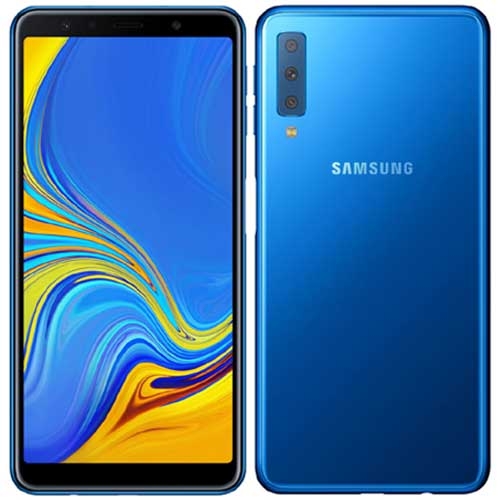
On the 11th of October 2018, Samsung holds a presentation in Malaysia where they were shown the first ever smartphone with 4 rear cameras. Samsung released a new premium mid-range smartphone that includes a 6.3-inch screen, a Snapdragon 660 octa-core chipset, and four back cameras, the Samsung Galaxy A9 (2018) and its Also known as Samsung Galaxy A9 Star Pro, Samsung Galaxy A9s.
Connectivity
GSM / HSPA / LTE type of network has available for this Samsung Galaxy A9 (2018) Smartphone. Connectivity is not a problem as it has everything including dual-SIM with 4G, dual-band WiFi, Bluetooth 5.0, and GPS. Calls are loud and clear, mobile data is fast, and GPS locks in quick in apps like Google Maps, Waze, or Grab.
Design and Display
In spite of the new specs and highlights, the looks of the Galaxy A9 (2018) hasn’t changed a great deal particularly in the event that you contrast it with other Galaxy A series devices before. It even looks like the Galaxy A8 (2018), however more extensive, so some should seriously think about it as dull.
It has a 6.3-inch display with 2.5D glass. Above it are earpiece, sensors, and 24MP selfie camera. It has a thin top and bottom bezels given the 18.5:9 aspect ratio. Up top are the microphone and triple card plate for two nano-sized SIM cards and a microSD card. Down underneath are the 3.5mm audio jack, USB-C port, and loudspeaker. On the left, we have the dedicated Bixby button, while on the right are the volume and power/lock catches. They’re clicky, feels tough, and reachable however can be a significant stretch on the off chance that you have little hands.
Flip it on its back, and you will see the superstar which is the quad-camera setup arranged on the left side, the LED flash, and the fingerprint scanner at the center. Although it looks similar to other A-series devices, the A9 (2018) is still a good-looking device especially if you consider the Lemonade Blue color. What we have here is the Caviar Black model which is not bad. However, we’re sad to learn that this doesn’t have any IP rating like the Galaxy A8+ (2018). It’s premium and has a decent heft to it, thanks to the metal frame and glass front and back. The glass back curves to sides for that more ergonomic feel but as expected, it’s a fingerprint and smudge magnet. Again, it is tall given the large screen so navigating it with one hand can be a challenge.
Camera
The Galaxy A9 (2018) brags as the world’s first quad camera Smartphone. The four cameras at the back are largely extraordinary and offer distinctive shooting experiences. Beginning from the best, we have the 8MP F2.4 ultra wide camera with 120-degree FOV, at that point the 10MP F2.4 telephoto with 2x optical zoom, at that point the 24MP F1.7 main camera, and the 5MP F2.2 depth camera for Live Focus.
It seems impressive as it allows the A9 (2018) to adapt to various shooting conditions: the wide-angle camera for landscapes and group shots, the telephoto if you want to get up close, and the main camera for general shooting and low-light scenarios. The depth camera, on the other hand, is just there to assist the main camera for Live Focus feature. You can easily switch between cameras with an on-screen toggle, which we find difficult to operate when shooting with one hand. Live Focus is a cool feature that allows you to shoot a subject then adjust the focus later. It also provides a cool bokeh effect as long as there’s a reasonable distance between the subject and the background. As for other features, the Galaxy A9 (2018) has the Scene Optimizer which adjusts the color settings of the photo based on the scene, Super Slow-Mo, AR Emoji, Hyperlapse, Beauty, Pro, and Panorama.
When it comes to quality, the cameras perform well in bright conditions, but you’ll notice differences in quality since they’re using different sensors. The 24MP main camera works the best in most situations as photos are sharp with accurate colors. The 8MP wide-angle does the job in capturing most of the scene although not as detailed and looks smudgy up close, while the 10MP telephoto sits between the two but still sharp with clean details. Low-light performance though is not good and gets peppered with noise while details get smudgy, especially when using the wide-angle camera. Selfies, on the other hand, are underwhelming. Details are too soft and lack sharpness even in bright conditions and get worse in low-light. For a 24MP sensor, this is disappointing. When it comes to videos, it can record up to 4K resolution at 30fps. At this resolution, it can’t use HDR, video effects, and video stabilization. If you want the mentioned features, you’ll have to scale down to 1080p.

Operating System
Running the Galaxy A9 (2018)’s software is Android 8.0.0 Oreo with Samsung Experience 9.0. It’s a little outdated compared to the 8.1 Oreo with SE 9.5 that the Galaxy Note9 has, but the experience is pretty much the same. Powering the Galaxy A9 (2018) is a Snapdragon 660 octa-core processor, with Adreno 512 GPU and 6GB RAM. This Snapdragon 660 is a high-end chipset that sits just below the new SD675/670. We didn’t encounter any problem with its performance as UI navigation is fast, the fingerprint scanner and face recognition are very responsive and quick, apps launch fast, while multitasking is smooth.
Storage and Ram
Storage-wise, we’re getting 109GB of usable space out of the 128GB, which is still sizeable. If you’re planning to expand it, we’re glad to report that it has a dedicated microSD card slot so, you don’t lose the dual-SIM functionality. It’s all well with memory. Do you often see a non-flagship smartphone with 6 GB (and in some regions 8 GB) of RAM and 128 GB of storage? I find this pair the most optimal and I am happy to see it in more affordable devices. Of the 128 GB flash drive, the user gets 108.96 GB. Need more? MicroSD slot is here, and you won’t need to sacrifice anything. It’s powered by a Qualcomm Snapdragon 660 with 6GB of RAM.
Conclusion
The Galaxy A9 (2018) is a device aimed at multimedia-heavy users who like taking photos and consume online content on a big screen. It’s also a good device for gaming as it has a good hardware configuration and a big battery.
Samsung Galaxy A9 is a curious device. You see the new Samsung philosophy: new features are first to appear in mid-rangers and not flagships. The consumer wins. The main feature is 4 cameras. And I think this direction is the right one. More modes, no restrictions. And now this multi-camera thing is just beginning to develop, and personally, I’m waiting for the stage when all matrices are the same, just with different focal lengths, so that the quality is the same. But that’s a different story.
It’s a bit too early to judge A9. Let’s wait till it’s sold in the stores.Overall, Samsung Galaxy A9 is okay: great design and build quality, and it feels like a flagship. The screen is also nice, and the power and RAM are more than enough. This is almost a flagship, which is why it’s more expensive. We’ll have to wait to see if the strategy works.

 Smartphone Detials